Types of Oolong Tea: Chinese & Taiwanese Varieties
Explore the main types of oolong tea from China and Taiwan. Learn oxidation levels, flavor profiles, and brewing methods for each variety.
On this page
What Makes Oolong Tea Different
Oolong tea is partially oxidized, which separates it from both green tea (minimal oxidation) and black tea (full oxidation). According to Art of Tea, even if an oolong is oxidized up to 99%, it's still classified as oolong. The oxidation level determines the tea's color, flavor, and how much it resembles green or black tea.
Oolong teas that have lower oxidation levels typically have lower caffeine levels, while a highly oxidized oolong will have higher caffeine levels. This is why two oolongs can taste completely different yet belong to the same category.
Chinese Oolong Teas
Iron Goddess of Mercy (Ti Kuan Yin)
Ti Kuan Yin is considered one of the most well-known Chinese teas. It has a floral flavor and aroma like that of an orchid. The name comes from Kuan Yin, a female Bodhisattva of Compassion in Buddhist tradition.
Big Red Robe (Da Hong Pao)
Wuyi oolong tea, also called Da Hong Pao, is dark and significantly oxidized. It gives a unique earthy flavor, with some hints of molasses, stone fruit, and brown sugar. Da Hong Pao joins the list of the most expensive teas worldwide.
According to legend, Da Hong Pao was the favorite of former President Nixon. Rock oolongs like Da Hong Pao push oxidation much further, then add charcoal roasting, which builds depth no amount of oxidation alone can produce.
Phoenix Oolong (Dan Cong)
Phoenix oolong tea is produced in China's Guangdong province. Harvested from a single bush, Phoenix oolong teas would have a different taste for each batch. Some Phoenix oolong teas create a floral flavor like orchids and orange blossoms, while others have spiciness and fruitiness like ginger and grapefruit.
Taiwanese Oolong Teas
High Mountain Oolong (Gaoshan)
High mountain teas are oolongs produced at an elevation of more than 1,000 meters. These teas are the most costly and prized by Taiwan's tea connoisseurs. Most high mountain teas are lightly oxidized and minimally roasted to retain their fresh, crisp flavors.
Due to cooler temperatures, clean air and abundant mist, high mountain teas display a creamy, almost milky, texture and a rich and sweet taste. High mountain teas are produced mainly in Nantou and Chiayi counties in central Taiwan, with well-known varieties including Ali Shan, Wu She, Li Shan and Yu Shan.
Milk Oolong (Jin Xuan)
Also called Golden Daylily tea, Jin Xuan tea offers a light, creamy, and floral flavor. This milk oolong tea is also cultivated in Thailand. Once the tea leaves undergo oxidation for a specific period, they deliver that natural milk-like flavor.
Dong Ding Oolong
Grown on Dong Ding Mountain in central Nantou County, Dong Ding tea is considered to be the origin of Taiwanese oolong. Tea plants and processing techniques were brought to this area from China over 100 years ago. The oolong teas made here are oxidized from 25-30% and brew a more robust, stronger tea with a characteristic lilac aroma.
Bao Zhong (Pouchong)
Bao Zhong is known as green oolong tea because of its similarity to green tea in terms of flavor, aroma, and color. Compared to other oolongs, Bao Zhong is less oxidized, so it doesn't have a bitter taste. It produces the same unique floral aroma and sweetness of oolong.
The name "Bao Zhong" comes from a Chinese term meaning "wrapped". It dates back to when tea farmers packed their tea four taels to the bag and then wrapped four bags together to form a rectangular shape. Produced in the mountain town of Pinglin in Taipei County, the distinguishing characteristics of Bao Zhong tea are its light, refreshing flavor and floral aroma. It is the least oxidized of the Taiwanese oolong teas.
Oriental Beauty (Bai Hao)
Bai Hao tea, also known as Oriental Beauty, is from Hsinchu County in northern Taiwan. The best quality Bai Hao is harvested in the summer. Bai Hao tea is processed to a greater degree of oxidation (around 50-60%) than other Taiwanese oolong teas. The result is a tea with a very smooth and sweet flavor, virtually no astringency, and a unique aroma of ripe peaches and honey.
Oolong Processing and What It Means
The processing of the tea after harvesting accounts for much of the diversity and uniqueness of Taiwanese oolongs. After the leaves are picked, they are dried in the sun for several hours, weather permitting. Then, the leaves are brought indoors where they are gently shaken in bamboo baskets or a rolling drum. This shaking serves to slightly "bruise" the leaves and start the oxidation process.
The defining production step in traditional oolong is yao qing (rocking the green): shaking or tumbling the leaves to bruise just the edges. Oxidation begins at the leaf margins while the center stays green. The producer watches, then fixes the leaves with heat to stop oxidation at the desired point.
After a partial oxidation, the leaves may be either rolled into the shape of a pearl or twisted sideways into long strips. After the initial shaping, the tea is fired at high temperature to stop any further oxidation. For pearl-shaped oolong teas, such as Dong Ding, the rolling and drying phases may be repeated a number of times.
Once the tea is dried, it is known as "mao cha" or raw tea. This type of tea is often sold as green-style oolong, which is the most popular style of oolong tea in Taiwan. The raw tea may be further roasted (or baked) to enhance both aroma and flavor characteristics. The roasting level can be light, medium or dark. The lightly roasted teas generally retain more of a floral character while the medium and dark roasted teas develop a sweeter, fruitier and toastier character.
How to Brew Oolong Tea
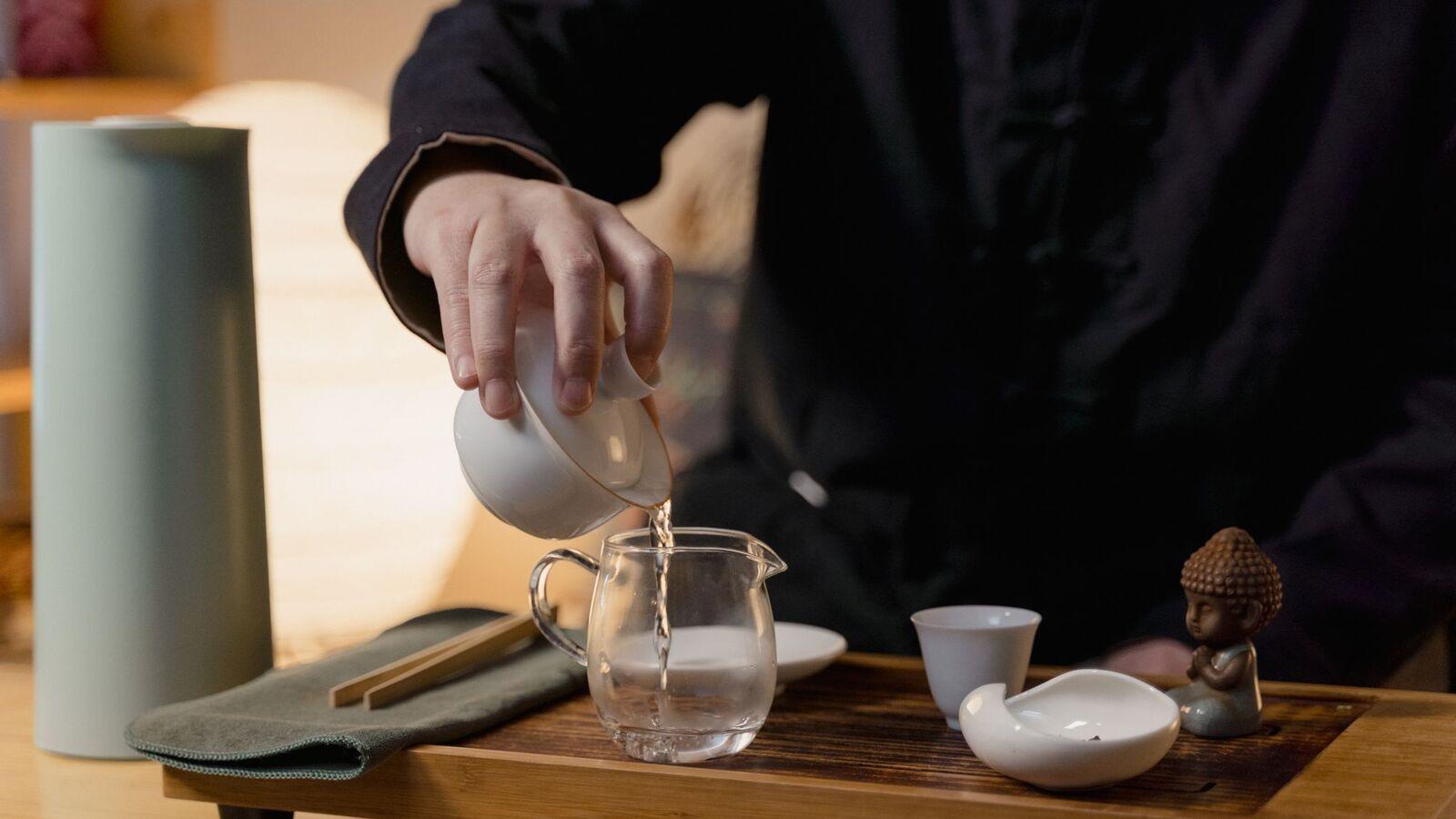
Most oolong teas are best prepared at a water temperature of 185°F to 206°F, with a steep time of approximately 3 to 5 minutes. These suggested temperatures may vary depending on the specific type of oolong that you will be brewing.
Oolong teas can be re-steeped multiple times, and oolongs will actually improve and transform with each re-steeping. Often, the 4th or 5th steeping is the best.
Caffeine Content
Oolong tea is a "true tea," meaning it is derived from the Camellia sinensis plant, so it does contain caffeine. The caffeine content in an oolong tea can vary and generally falls somewhere between a black and green tea, depending on how long it has been oxidized.
Compared to coffee, oolong tea contains lower caffeine levels. If coffee offers 95 to 200 milligrams of caffeine for every 8-ounce serving, oolong tea only has around 35 to 55 milligrams per 8-ounce serving.
Seasonal Variations
The flavors of oolong teas change dramatically from season to season. Oolong teas harvested during the spring and winter seasons are considered to be superior to teas harvested during the summer and fall. This is mainly due to the weather conditions at the time of harvest. The cooler temperatures and seasonal fog result in a more succulent leaf. Spring flavors are robust with a distinctive flowery note. Winter flavors tend to be crisper and lighter.
How Oolong Fits Into Tea Types
Oolong sits between green tea and black tea in the oxidation spectrum. Read our complete guide to oolong tea for deeper brewing details and more variety names. For comparison with other tea types and how to select brewing equipment, see the Asian tea set buying guide. You can also explore other Asian teas in our guide to bottled Asian teas.
Finding Your Oolong
The variety of oolong means you can find a style that matches your preference. If you like light, floral teas, start with Bao Zhong or high mountain oolongs. If you prefer deeper, roasted flavors, try Da Hong Pao or medium to dark roasted Gaoshan. Milk oolong offers a middle ground with its natural creamy sweetness.
- types of oolong tea
- oolong tea varieties
- Chinese oolong
- Taiwanese oolong
Written by
Cha2go Editorial TeamThe Cha2go editorial team researches each page from cited sources and corrects errors when readers report them.
How our pages are made